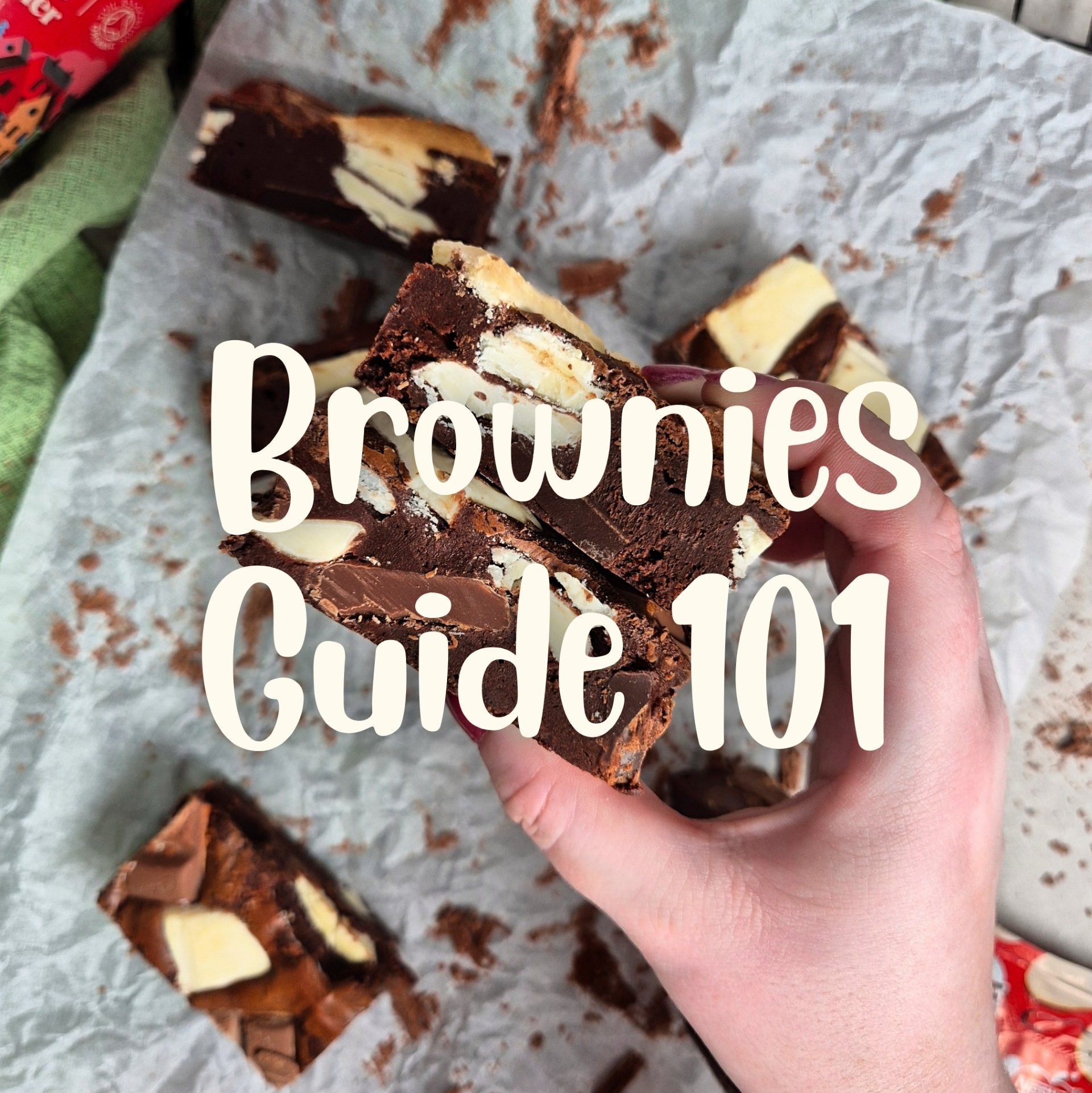
The ultimate brownie guide covering brownie types, baking techniques, ingredient breakdowns and troubleshooting for perfect brownies.

What Is a Brownie?
A brownie is a classic chocolate baked dessert, typically made as a dense, rich bar with a deep chocolate flavour. Brownies are known for their indulgent texture, which can range from fudgy and gooey to light and cakey, depending on the ingredients used and how they’re baked.
The texture of a brownie is largely determined by the ratio of fat to flour and the number of eggs used. Fudgy brownies contain more butter or chocolate and less flour, with little to no leavening agent. This creates their signature dense centre, chewy edges, and that iconic glossy, crackly top. Cakey brownies, on the other hand, use more flour and eggs, resulting in a lighter, more sponge-like texture.
Traditional brownies are made using simple baking staples such as butter, sugar, eggs, flour, and chocolate or cocoa powder. Despite their simplicity, small changes in these ingredients can dramatically affect the final result.
Brownies are usually enjoyed as hand-held bars but can also be served warm with ice cream, whipped cream, or a glass of milk, making them a versatile dessert suitable for any occasion. Whether you prefer rich and fudgy or light and cakey, brownies remain one of the most loved chocolate desserts worldwide.

The Importance of Ingredients in Brownie Making
When it comes to brownies, ingredients matter just as much as the method. The balance between moisture-rich ingredients and dry ingredients is the most important factor in determining whether your brownies turn out fudgy, chewy, or cakey. Too little fat can lead to dry, crumbly brownies, while too much can make them greasy and heavy. Understanding the role of each ingredient will help you master brownie texture every time.
- Butter- Butter is one of the most important ingredients in brownie recipes. It adds richness, flavour, and moisture while helping to create a dense, fudgy texture. Melted butter is often used in fudgy brownies because it coats the flour and limits gluten development, keeping the brownies soft rather than cake-like. Using too little butter can result in dry brownies, while too much can cause them to feel greasy.
- Chocolate- Chocolate, whether melted dark or milk, contributes both flavour and fat. Recipes that rely heavily on melted chocolate tend to produce richer, fudgier brownies compared to those using cocoa powder alone. Chocolate also helps create that iconic glossy, crackly top when combined properly with sugar.
- Cocoa Powder- Cocoa powder intensifies the chocolate flavour without adding extra fat. It gives brownies a deep, chocolatey taste and slightly firms the structure. Using cocoa powder alone can create a drier brownie, which is why it’s often paired with melted chocolate or extra butter to maintain moisture and fudginess.
- Eggs- Eggs provide structure and moisture in brownies. Fewer eggs create a denser, fudgier brownie, while more eggs introduce air and create a lighter, more cake-like texture. Adding an extra egg yolk increases richness and chewiness without making the brownies too airy.
- Golden Syrup- Golden syrup adds sweetness, moisture, and chewiness to brownies. It helps keep brownies soft forreducing dryness and contributes to a glossy top and slightly caramelised flavour. It’s especially useful in fudgy brownie recipes where texture is key.
- Flour- Flour gives brownies their structure. Using less flour results in denser, fudgier brownies, while more flour leads to a cakier texture. Over-measuring flour or over-mixing can develop too much gluten, which is why weighing flour accurately and mixing gently is essential for soft brownies.
- Sugar- Sugar does more than sweeten brownies. It helps retain moisture, contributes to chewiness, and plays a key role in forming the crackly top. White sugar helps create that shiny surface, while brown sugar adds extra moisture and a subtle caramel flavour.


Baking Tin Size and Why It Matters for Brownies
- The size of the baking tin you use is a crucial factor when it comes to baking perfect brownies. Even if you follow a brownie recipe exactly, using the wrong tin size can dramatically affect the final result. A tin that’s too large can cause brownies to spread too thin, leading to dry or overbaked edges, while a tin that’s too small can result in thick brownies that are underbaked in the centre.
- Brownie recipes are carefully developed with a specific tin size in mind to ensure the correct thickness, baking time, and texture. If you change the tin size without adjusting the baking time or ingredient quantities, you may end up with brownies that are unevenly baked, burnt on the edges, or still raw in the middle.
- Tin depth also matters. Shallow tins encourage faster baking and can produce thinner, firmer brownies, while deeper tins slow down the bake and help create thicker, fudgier brownies. Metal tins tend to conduct heat more efficiently than glass or ceramic dishes, which can also affect baking times and browning.
- For best results, always use the tin size specified in your brownie recipe. If you do need to change the tin size, be prepared to adjust the baking time and keep a close eye on doneness. Lining your tin with baking paper can also help with even baking and make removing your brownies easier once cooled.
Understanding how baking tin size impacts brownie texture is key to achieving consistent results, whether you’re aiming for dense, fudgy brownies or lighter, cakier ones. My favourite baking tin to use is this 9inch square tin from Morphy Richards. Use code BITEOFBAKES for 20% off.

The Importance Of The Refrigerator
Refrigerating your brownies after baking is a key step in achieving the best fudgy texture. Once the brownies have fully cooled, I highly recommend placing them in the fridge for 3–4 hours, or ideally overnight. This resting time allows the chocolate and butter to fully set, resulting in a dense, rich texture and clean, sharp slices. Chilling your brownies also helps enhance the flavour and ensures that perfectly fudgy finish every time.

Common Brownie Texture Problems and What Causes Them
Brownies That Are Too Greasy
Greasy brownies are often a sign that they’re underbaked or contain too much moisture. This can be caused by using too much sugar, too much fat, or low-quality chocolate that releases excess oil as it melts. To avoid this, focus on maintaining a balanced fat-to-flour ratio and always bake brownies until the centre is just set but still soft.
Crumbly or Dry Edges
Crumbly edges are usually caused by overbaking or using too much flour. Measuring ingredients accurately with a food scale can prevent this issue. Keeping a close eye on baking time and using an oven thermometer to ensure correct temperature can also make a big difference.
Brownies That Are Too Cakey
Cakey brownies often result from overmixing, using too many eggs, or having too much flour compared to fat. Overbaking can also contribute to a cake-like texture. To keep brownies fudgy, mix gently and stop as soon as the ingredients are combined.
Brownies That Are Dense and Heavy
Brownies that feel overly dense or heavy can be caused by improper mixing or an imbalance in dry ingredients, such as not enough flour or cocoa powder. Ensuring your dry ingredients are well distributed and mixing evenly but not excessively helps create a balanced texture.

How to Make the Perfect Fudgy Brownies
The method is just as important as the ingredients when it comes to achieving that perfect fudgy brownie texture. Follow these steps for rich, dense, chocolatey brownies every time:
- Whip the eggs and sugar: Start by beating your eggs and sugar together on the highest speed your hand mixer or stand mixer allows. Whip until the mixture is pale, light, and fluffy, and has roughly doubled in size. This step creates the air needed for a slightly airy yet dense brownie.
- Melt the chocolate and butter: While the eggs are whipping, melt your butter, chocolate, and golden syrup together. Use one-minute bursts in the microwave, stirring well between each burst until fully smooth. Allow the mixture to cool for 5 minutes before adding it to the eggs to prevent curdling.
- Combine chocolate and eggs: Once your eggs are whipped, switch to a paddle attachment or a spatula and gently fold in the melted chocolate mixture. The batter should gradually turn a light brown, glossy consistency.
- Add dry ingredients: Sift your flour and cocoa powder to avoid lumps, then fold them carefully into the batter. If using a stand mixer, you can mix on low speed (around speed 3) for 30 seconds. If folding by hand, gently fold until just combined.
- Don’t overmix: Be careful not to mix vigorously at this stage, as it will knock out the air you created when whipping the eggs. Overmixing can lead to denser, less fudgy brownies.

Tips & Tricks
- Use real butter but you can use baking spread if you’d like!
- Don’t over bake- slightly underdone = fudgier
- Mixing- When mixing your brownies, whisk the eggs and sugar until light and fluffy. Fold in the rest of your ingredients until just in cooperated. Over-mixing can affect your batter and affect the bake time.
- Melt the butter with chocolate for a silky brownie base.
- Re-fridgerate your brownies overnight or for a few hours. This is a MUST for the best fudgy brownies!
- Use good-quality chocolate for the richest flavour. Use high-quality chocolate bars instead of chips for the best melt and flavour.
- Chill before cutting for clean, bakery-style slices.
- I made my brownies thick as I love a chunky brownie but you could use a bigger tray and make the brownies thinner! Just keep an eye on the baking time and take them out when they have a slight wobble!

Fudgy Brownie Recipe
Here is my fudgy brownie recipe, designed to create the perfect fudgy brownies every time. These brownies are rich, dense, and intensely chocolatey, with a soft, gooey centre and that classic chewy texture. If you’re looking for a brownie recipe that delivers deep chocolate flavour and the ultimate fudgy consistency, this is the one to try.

Triple Chocolate Brownies
Ingredients
- 210g Dark Chocolate
- 210g Unsalted Butter
- 280g Caster Sugar (Or Icing Sugar).
- 3 Medium Eggs (50g Each).
- 100g Plain Flour
- 50g Cocoa Powder
- 30g Golden Syrup
- 1 Tsp Vanilla
- 1/2 Tsp Salt
- 150g Milk Chocolate (Chopped).
- 150g White Chocolate (Chopped).
Instructions
- Pre-heat your oven (Gas mark 4/ 180c) and line a 9 inch baking tin with baking paper/ parchment paper.
- Melt the butter and dark chocolate together in the microwave in short bursts. Stir until smooth, then let cool slightly. (This may take 2-3 minutes).
- In a separate bowl (I recommend using a stand mixer but an electric hand whisk will work too). Add in your sugar and eggs and whisk on high for 10 minutes until the mixture is light and fluffy.
- Pour your melted chocolate/butter mixture into the egg mixture. (If using a stand mixer, change to a paddle attachment. If using an electric hand whisk, change to a spatula and fold the melted mixture in). Mix the chocolate mixture with the egg mixture on a low speed until in-cooperated.
- Add in your vanilla, golden syrup and sift in the flour, cocoa powder, and salt. Gently fold until just combined. Don’t over-mix!
- Fold in the milk and white chocolate chunks. You can also sprinkle a few extra on top for a gooey finish.
- Pour into a lined 9 inch square tin and smooth the top. Bake for 30-35 minutes, or until the edges are set but the centre is still soft. Don’t over-bake, your brownies will have a slight wobble in the middle.
- Refrigerate for 3-4 hours or preferably overnight! This will make your brownies fudgy and delicious!
- Slice and Eat!